
The Smart City Mission Dehradun was launched with considerable fanfare in 2015. The city was selected in the first round of 20 smart cities under the central government’s flagship urban development programme. More than a decade later, Dehradun residents are still waiting for most of the transformation that was promised. The question of why the Smart City Mission Dehradun has not delivered is not a comfortable one, but it is the right one to ask.
The Smart City Mission Dehradun received over ₹1,000 crore in central and state funds across its project period. The outcomes are visible in parts: improved LED street lighting on Rajpur Road, a handful of smart bus shelters, surveillance cameras at major intersections, and an integrated command and control centre at the MDDA headquarters. But the structural problems of the city — traffic, water, flooding, air quality, unplanned construction — remain substantially unchanged. The mission spent well; it is less clear that it built well.
Where the Money Went
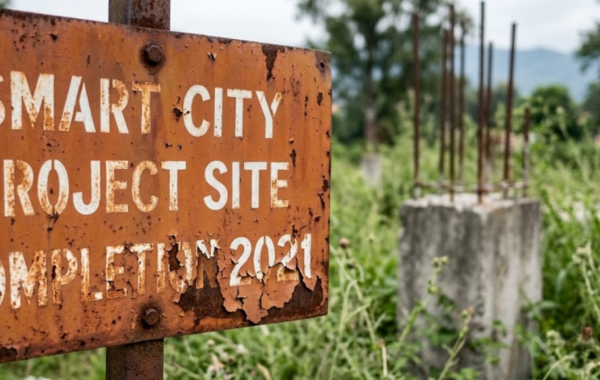
The Smart Cities Mission portal lists Dehradun’s completed projects: a new city bus fleet, a WiFi network in the CBD area, smart classrooms in municipal schools, and the command centre. Several projects — including a proposed bike-sharing system and an underground cabling project on Rajpur Road — were either cancelled or indefinitely deferred. The Smart City Mission Dehradun’s project completion rate, publicly available on the mission dashboard, sits at around 65 percent as of early 2026. That leaves 35 percent of funded projects incomplete or stalled.
Structural Problems the Mission Could Not Fix
The Smart City Mission Dehradun’s fundamental limitation is that it was an overlay programme, not a governance reform. It created a Special Purpose Vehicle (the Dehradun Smart City Limited) with project management powers but no authority over land use, zoning enforcement, or water distribution — the core functions that shape urban life. The MDDA, Mussoorie Dehradun Development Authority, and the Nagar Nigam continued operating independently with their own mandates and budgets. The MDDA’s role in approving construction on floodplains, for instance, was not touched by the smart city programme at all.
What Would Actually Work
A genuine smart city transformation for Dehradun requires three things that no central mission can provide from Delhi: political will at the state level to enforce zoning laws, a unified urban authority that removes the fragmentation between MDDA, Nagar Nigam, and the Cantonment Board, and a long-term city plan with legal teeth. The Smart City Mission Dehradun was a useful investment in technology and infrastructure — but technology without governance is decoration.
Final Thought
The Smart City Mission Dehradun has not failed — that framing is too simple and too unfair to the real work done by the SPV teams. But it has not transformed the city either, and pretending otherwise does a disservice to the residents who funded it and waited for results. The honest conclusion is that Dehradun needs a smarter city — not just a Smart City programme. The difference is substantial, and it starts with who has power and accountability over the decisions that actually shape life on these streets.



Leave a Reply