Rajpur Road: Development Timeline
| Era | Key Change |
|---|---|
| Pre-1947 (Colonial) | Military road to hills; British bungalows and orchards lining the route |
| 1950s-1970s | Middle-class housing and government institutions expand along the road |
| 1980s-2000 | First hotels, restaurants and commercial buildings appear |
| 2000-2015 | Rapid growth post Uttarakhand statehood; malls, hospitals, IT offices open |
| 2015-2026 | Premium real estate boom driven by expressway; 30-40% price rise on upper stretches |
Where the Road Starts and What It Carries
Rajpur Road begins in central Dehradun and runs north toward the Mussoorie hills. For most of the city’s modern history, this was the primary route up to the hill station, and the character of the road reflects each period of its use. It has been a colonial thoroughfare, a Tibetan refugee settlement corridor, and, most recently, the preferred address for Dehradun’s premium cafes, hotels, and residential projects.
Few streets in the city compress as much history into a single two-kilometre stretch.
The 19th-Century Origins
Old Rajpur is among the oldest colonial-era localities in Dehradun, gaining its first prominence in the 1830s and transforming rapidly around the 1870s. The reason was practical geography. The only reliable route to Mussoorie from the Doon Valley ran through Rajpur via the Jharipani trail. Everyone heading to the hill station, whether British administrator, merchant, or local official, passed through Old Rajpur first.
By 1868, the Saharanpur railway station had become operational. Travellers arriving from Calcutta or Delhi would alight at Saharanpur and travel the remaining distance to Dehradun by horse-drawn carriage along the dirt road through the valley. Rajpur was the last major stop before the climb to Mussoorie. It operated as a rest point, with horse stabling, basic accommodation, and provisions available to travellers completing the journey in stages.
In 1900, the Dehradun railway station opened, and the volume of visitors through Rajpur increased significantly. For the better part of the early 20th century, Rajpur Road carried most of the tourist and administrative traffic moving between the plains and Mussoorie. The town on the road became, as one account describes it, “a happening pit stop, abuzz with human activity, the neighing of horses, and the sweet, cool breeze drifting down from the hills.”
The Tibetan Presence
After the Dalai Lama’s arrival in India in 1959 and his initial stay in Mussoorie, a substantial number of Tibetan refugees made their way to the Rajpur area. The community built monasteries, established a Tibetan school, and set up residential clusters. Three generations later, the presence of Tibetan families along and near Rajpur Road remains visible in the monasteries, the prayer flag lines on residential buildings, and the restaurants that serve food unchanged from what the community cooks at home.
Lhasa Tibet Kitchen at Old Rajpur is one of the first authentically Tibetan restaurants in Dehradun. It sits in the older part of Rajpur, before the road transforms into the commercial corridor of recent decades. The kitchen offers home-cooked Tibetan preparations: thukpa, momos, tingmo, and butter tea, in a setting more modest than the newer establishments further down the road.
What the Road Looks Like Now
The lower and middle stretches of Rajpur Road today are recognisable to anyone familiar with premium commercial corridors in Indian cities. The Hyatt Centric Rajpur Road Dehradun represents the hotel tier. Branded cafes, fitness studios, co-working spaces, and apartment complexes have replaced older commercial establishments. Property listings on platforms like 99acres show rates reflecting significant appreciation over the past decade.
The shift is documented clearly by residents. Old Rajpur, as commentators from Doon Circle note, is “falling prey to the café culture spreading like wildfire in the town.” The concrete structures, shopping setups, and high-rises changing the skyline are arriving faster than the city’s planning mechanisms have managed.
Kalsang Restaurant at 88A Rajpur Road, opposite Osho Chander Lok Colony at Hathibarkala Salwala, sits in the middle period of this transition. It opened after Rajpur Road had already begun its commercial transformation but before the premium hotel belt arrived. It has become one of the reference points on the street for people who want a meal tied to the city’s older food culture rather than its newer café ambitions.
Property and Infrastructure
Property prices on Rajpur Road rank among the highest in Dehradun. The road’s connectivity, its retained greenery on the upper stretches, and its proximity to Mussoorie make it attractive for both residential and commercial investment. The corridors closest to the hills retain larger plots with older bungalows, many of which are being purchased and converted into apartment complexes or boutique hotels.
Traffic management on Rajpur Road is a persistent complaint from residents, particularly during school hours and weekends when Mussoorie-bound vehicles back up through the lower sections. The road was built for a traffic volume the city has long since exceeded, and no serious widening or bypass solution has been implemented despite years of discussion.
The Street as a Measure of the City
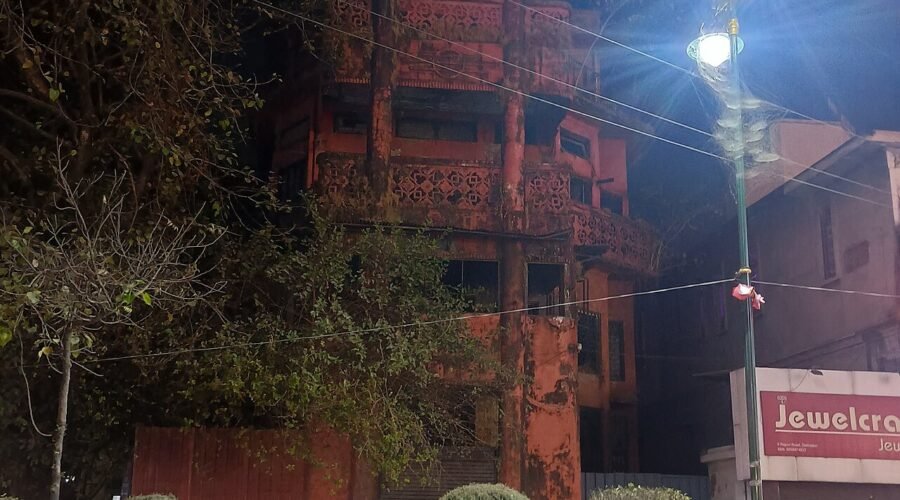
Rajpur Road has gone through at least four distinct phases: colonial thoroughfare, post-independence residential zone, Tibetan cultural corridor, and recent commercial hub. Each layer is still visible if you know where to look. The Tibetan monastery on the upper stretch, the older bungalows set behind eucalyptus groves, the glass-front cafes on the lower commercial section, and the narrow lanes of Old Rajpur where the original settlement character survives without much modification.
Walking Rajpur Road from the Clock Tower end to Old Rajpur and back covers more of Dehradun’s recent history than most dedicated heritage sites. Stop at Lhasa Tibet Kitchen for a meal. Look at the bungalows not yet absorbed by redevelopment. The street shows the city more honestly than any tour guide summary does.
Rajpur Road Today
Rajpur Road continues to evolve and remains the most important street in Dehradun. For more on Dehradun’s neighbourhoods and lifestyle, visit Hello Doon and explore our Dehradun food guide. You can also read about Dehradun on Wikipedia.

Leave a Reply