Tibetan Culture Dehradun: Community Landmarks
| Place | Type | Area |
|---|---|---|
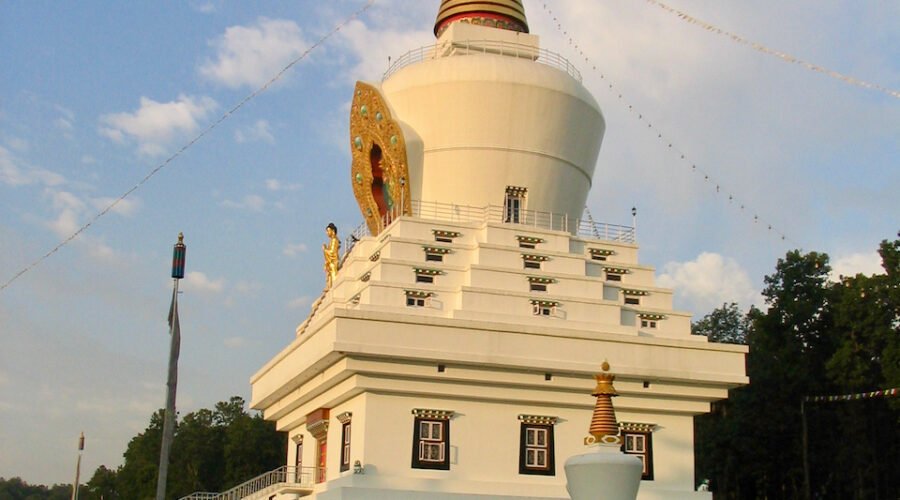
| Mindrolling Monastery | Buddhist monastery and stupa | Clement Town |
| Doeguling Settlement | Residential colony, 5,000+ residents | Clement Town |
| Palju Market | Tibetan bazaar and handicrafts | Tapkeshwar area |
| Rokpa Kitchen | Tibetan restaurant | Rajpur Road |
| Tibetan Refugee Market | Clothing, carpets, artefacts | Clock Tower area |
A Settlement Built After 1959
The Central Tibetan Administration tracks the welfare of all Tibetan settlements across India. According to the Central Tibetan Administration, over 3,000 Tibetan families live in Clement Town alone, making it one of the most significant Tibetan communities outside the Tibetan Autonomous Region. The Mindrolling Monastery, founded in 1965 in Clement Town, is one of the largest Nyingma monasteries in India and draws Buddhist pilgrims from across the world.
When China took control of Tibet in 1959, around 80,000 Tibetans fled with the Dalai Lama into exile. A significant number settled in Uttarakhand, with Dehradun becoming one of the primary destinations. The neighbourhood of Clement Town, in the southwestern part of the city, absorbed the largest number of Tibetan families and has remained the cultural heart of the community ever since. Tibetan culture in Dehradun is woven into the city everyday life.
The name Clement Town traces back to Father R.C. Clement, an Italian priest who settled in the region around 1934. The Tibetan community arriving decades later built homes, schools, monasteries, and businesses on land the Indian government provided as part of its refugee resettlement programme. What grew from that allocation is one of the most coherent ethnic-cultural neighbourhoods in any Indian city.
The Mindrolling Monastery and What It Means for the City
The centrepiece of Clement Town’s Tibetan identity is the Mindrolling Monastery, re-established in 1965 by Khenchen Rinpoche of the Kagyu School of Tibetan Buddhism. The reconstruction process took decades. The main stupa, inaugurated on 28 October 2002, is one of the largest in the world at the time of its completion. The monastery draws tens of thousands of pilgrims and tourists every year and is among the major Buddhist centres in India.
The Tibetan Children’s Home in the Dhondupling Tibetan Colony opened on 18 March 1991, inspired by the Tibetan Children’s Village schools established under the 14th Dalai Lama’s guidance. The school educates hundreds of Tibetan children in Dehradun while preserving language and cultural traditions difficult to maintain in exile. Walking through Dhondupling Colony today, the signs, the prayer flags, the architectural choices on residential buildings, and the languages spoken on the street all signal a community determined to hold onto its identity.
The Tibetan Market: Two Locations, One Community
The Tibetan Market in Dehradun operates at two locations: one near Parade Ground and another near Rispana Pul. The Parade Ground market is the more visited of the two. Established in 1989, it had around 150 shops with 15 entry points at its peak and remains a primary commercial hub for Tibetan vendors in the city.
The stalls sell Tibetan woolens, hand-knotted carpets, religious artefacts, jewellery, and clothing. The carpet weaving tradition is particularly notable. Several Tibetan families have sustained this craft across generations, with weavers in Clement Town having worked at the same loom for three to four decades. These are not mass-produced items. The carpets sold in the Tibetan Market are made by hand in workshops within the same colony.
Beyond carpets, the seasonal sweater trade throughout Dehradun is almost entirely run by Tibetan vendors. The tradition of temporary sweater stalls on Rajpur Road and near the Clock Tower runs from September through January and has become a fixture of the city’s autumn and winter identity. It is commerce sustained not by advertising or retail chains but by a community’s inherited trade knowledge.
The Tibetan Market near Parade Ground takes two hours to walk through properly. If you want to understand how a displaced community rebuilt its economic life in a new city, start there.
How the Food Culture Arrived
Early Tibetan restaurants in Dehradun opened in the Cantonment area in the mid-1970s. Those early establishments served two things: momo and thukpa. The clientele was small, the kitchen equipment was minimal, and the dishes were what Tibetan families ate at home. The Cantonment area, close to army establishments, had a clientele willing to try unfamiliar food, and word spread through Dehradun’s institutional circles faster than it might have in a purely civilian neighbourhood.
Over the following decades, menus expanded as the community grew more confident and demand from non-Tibetan residents increased. A full Tibetan meal in Dehradun today includes steamed and fried momos in multiple variations, thukpa (a hearty noodle broth), tingmo (steamed bread rolls eaten with curry), shabaley (a fried meat pastry), and butter tea, which remains an acquired taste for most first-time visitors.
The Restaurants Worth Knowing About
Lhasa Tibet Kitchen in Clement Town is one of the oldest continuously operating Tibetan restaurants in Dehradun and one of the few maintaining an explicitly home-cooked style. The kitchen does not simplify or adapt dishes for a broader audience. What you eat at Lhasa Tibet Kitchen is close to what the community eats at home.
The Mindrolling Monastery itself serves free pure vegetarian Tibetan food on certain days, including dumplings and variations on thukpa. The experience of eating on monastery premises is different from any restaurant meal and worth pursuing if you are visiting the monastery.
Kalsang Restaurant at 88A Rajpur Road, opposite Osho Chander Lok Colony at Hathibarkala Salwala, is the city’s most reviewed Tibetan establishment. Its Zomato rating holds at 4.2 out of 5 with consistent feedback on the chilli momos. The kitchen stays open from 12 PM to 10:30 PM and runs a menu covering Tibetan, Chinese, and Thai preparations. Kalsang Ama Cafe, a smaller related establishment, has a warmer and quieter atmosphere if the main restaurant is crowded.
What Tibetan Food Tells You About Dehradun
Tibetan food in Dehradun long predates the momo wave that swept Indian cities over the past decade. The dish was established here by the late 1970s and became common street food well before it appeared on menus in Delhi or Mumbai. When Dehradun locals claim the city has the best momos in the plains, they are pointing to six decades of consistent preparation and community investment in a single food tradition.
The broader influence shows up in the architecture of the food scene. Dehradun has a higher concentration of Tibetan-run restaurants per capita than most Indian plains cities. The dishes have not been heavily modified for local palates. The butter tea is still butter tea. The thukpa broth is still built on yak-style stock preparation rather than the lighter Indian vegetable bases common at imitation Tibetan restaurants elsewhere.
Tibetan culture in Dehradun has shaped the city in ways that go well beyond food and festivals.
If you are in Dehradun with a morning free, the clearest route through this cultural geography runs: Mindrolling Monastery, Dhondupling Colony, Lhasa Tibet Kitchen for lunch, then the Tibetan Market near Parade Ground. That four-hour walk covers more community history than most people encounter in a full day of sightseeing. Go on a weekday morning when the monastery is quieter and the market vendors are less pressed for your attention.
Tibetan culture in Dehradun continues to attract visitors, researchers, and food lovers from across India who want an authentic taste of the Himalayan world in an accessible city.
The Tibetan culture in Dehradun is a living heritage that continues to thrive through its markets, restaurants, and monasteries. For more Dehradun guides, visit Hello Doon.


Leave a Reply