The craft traditions in Dehradun are slipping out of the city quietly. There are no protests, no social media campaigns, and no headlines. The people who know how to make these things are aging, the next generation has moved into other work, and the buyers have shifted to mass-produced alternatives. This is a list of what is being lost, where you can still see it being made, and what would have to change for any of it to survive into the next decade.
Ringaal Bamboo Weaving
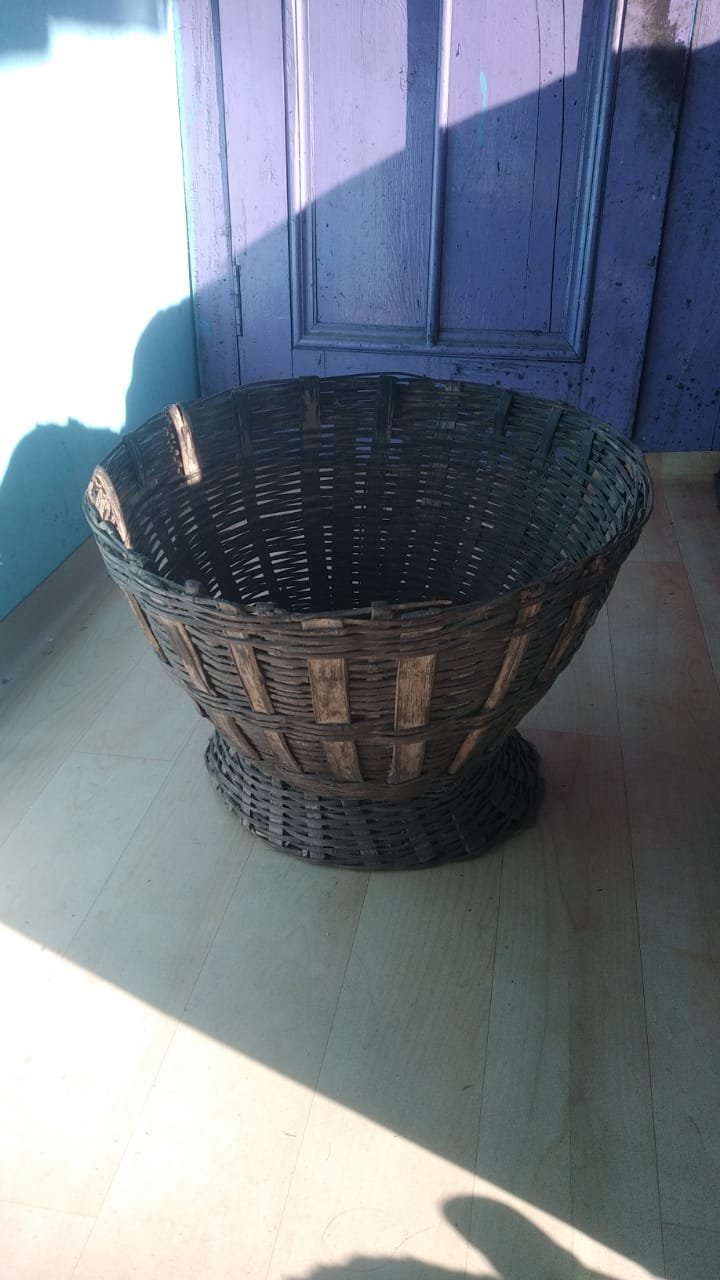
Ringaal is a slim variety of mountain bamboo that grows along the Garhwal slopes around Dehradun, and the basket weaving built around it is one of the oldest craft traditions in Dehradun’s hinterland. Artisans split the bamboo into thin strips and weave them into soulta baskets used to carry firewood, cow dung cakes, and grass. The hexagonal weave makes the baskets sturdy with minimal material, and the technique has been passed down through generations in villages above Mussoorie and around Chakrata. The problem is straightforward. The buyers for soulta baskets were rural households using firewood for cooking. As LPG penetration improved, the daily-use demand collapsed. A documented record of the Ringaal craft exists, but documentation does not pay artisans.
Garhwali Handloom Weaving
The handloom weaving in the villages around Dehradun produced the woollen panchhi shawls, the dhotu (a wraparound for women), and a range of cotton and silk textiles. Each weave carried regional patterns, and the dyes were natural, derived from walnut hulls, marigold, indigo, and madder. Most of the active looms today are concentrated in Munsiyari and Pithoragarh in Kumaon, but a smaller cluster persists near Dehradun in pockets like Chakrata and Vikasnagar. The reason these are dying is competition from machine-made woollens at one-third the price, plus the long training time. A weaver needs three to four years to produce a marketable shawl, and few young people see that as a career path.
Copperwork from the Foothills
Copper utensils, particularly the gagri (water pot) and lota, were made in small clusters in the foothill towns around Dehradun. The work involved beating thick copper sheets into shape, annealing, and finishing with tin coating on the inside. These utensils were standard in Garhwali households for storing drinking water and serving milk. Today, you might still see them in older homes in Vasant Vihar or Dalanwala, but the craftsmen who made them have largely shifted to other metalwork or to repair work for restaurants. The economic pressure is brutal. A handmade copper gagri sells for Rs.2,500 to Rs.4,000. A machine-stamped one in stainless steel costs Rs.400.
Wooden Toy Making and Carved Furniture
Dehradun used to have a wooden toy and furniture cluster that supplied Mussoorie’s tourist market and the schools. Hand-carved walnut and toon wood furniture, miniature wooden carts, and chess sets were the typical output. The cluster has shrunk to a handful of workshops in Niranjanpur and a few survivors in the older lanes off Dharampur. Carving has been replaced by CNC routing, which is faster, cheaper, and produces what casual buyers consider acceptable quality. The remaining hand carvers work mostly on restoration projects for colonial-era bungalows and for a small clientele who specifically request handwork.
Tibetan Carpet Weaving in Clement Town
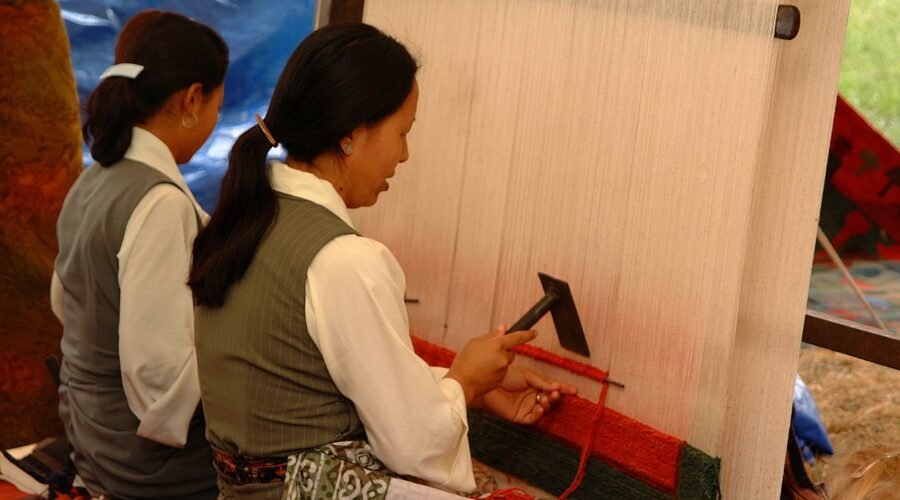
The Tibetan carpets woven in Clement Town since the settlement was established in the 1960s are one of the few craft traditions in Dehradun that has both historical depth and continuing demand, but the workforce is shrinking. The carpets use a Tibetan loop knot, which is different from the symmetric and asymmetric knots of Persian and Kashmiri rugs. Patterns include lotus motifs, dragons, and geometric mandalas. The Tibetan Children’s Village and the Norbulingka workshop in Clement Town keep production going, but the artisan count has dropped from over 200 in the 1980s to roughly 40 working weavers today. Younger Tibetan settlers are moving into hospitality, restaurants, and the diaspora, leaving the looms understaffed.
Beekeeping and Wax Craft
Beekeeping in the Garhwali tradition produced honey and beeswax, and the wax was used to make candles, sealing materials, and a few decorative items. The craft has not vanished but has commercialised in a way that strips out the older techniques. Industrial honey production with imported European bee species (Apis mellifera) has displaced the indigenous Apis cerana hives, and the wax that came as a by-product of these hives carried a different aroma and texture used in older religious and ritual practices. You can still find pure wild Garhwali honey at the Uttarakhand Mahila Dairy outlet on Saharanpur Road, but the older wax craft has all but disappeared.
What Would Help
The Uttarakhand Handloom and Handicraft Development Council runs schemes that subsidise inputs and provide market linkages. The UHHDC platform maintains a directory of registered craftspeople. The schemes work in pockets, but the structural problem is buyer demand. Without a steady customer base willing to pay a premium for handwork, no amount of subsidy keeps an artisan family going past the third generation. Three things would help. First, consistent purchasing by hotels and homestays in the Doon Valley to use these crafts in their interiors. Second, a curated retail outlet in central Dehradun that aggregates output and pays artisans transparent rates. Third, a working apprenticeship model that pays trainees a stipend during the three-to-five-year learning curve.
Where You Can See These Crafts Today
The Doon Valley has a few places where these surviving craft traditions in Dehradun are visible. The Uttarakhand Haat outlet near the Survey of India campus stocks Ringaal baskets, handloom shawls, and ceramic ware. The Tibetan Carpet Centre in Clement Town allows visitors to watch weaving in progress. The Sunday market at Paltan Bazaar occasionally has handloom stalls from the surrounding villages, similar to the makers we covered in our piece on Dehradun’s creative communities. For deeper context, see our piece on how Tibetan culture shaped Dehradun’s bazaars.
Craft traditions in Dehradun are not dying because nobody loves them. They are dying because the economics do not work. Saving them is a buying decision, not a sympathy decision. Pay the artisan fair money for what they make, and the trade survives one more generation.

Leave a Reply