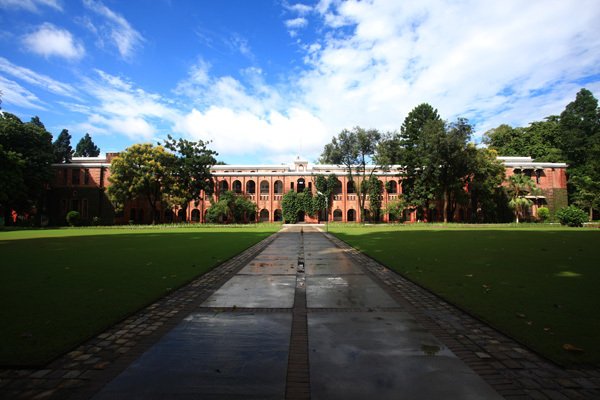
Dehradun School Capital: Key Institutions That Built the Reputation
| School | Year Founded | Type | Board |
|---|---|---|---|
| The Doon School | 1935 | Boys boarding | CBSE |
| Welham Boys School | 1937 | Boys boarding | CBSE |
| Welham Girls School | 1957 | Girls boarding | CBSE |
| Bishop Cotton School | 1859 (Shimla) | Boys boarding | ISC |
| Oakgrove School | 1888 | Co-ed boarding | CBSE |
| Ecole Globale | 2009 | Girls boarding | CBSE/IB |
The Numbers Behind the Title
Dehradun school capital status is the result of over 170 years of educational history. Dehradun has more than 100 residential schools, attracts students from over 25 countries, and is home to some of the most selective admissions processes in Indian education. The city is called the School Capital of India, and separately the “Eton of the East.” Both titles point to the same reality: a concentration of high-calibre boarding schools unmatched in any other Indian city.
This did not happen by accident. Three factors drove it: colonial-era intent, geographic advantage, and the self-reinforcing reputation of a few anchor institutions founded before Indian independence.
The Colonial Beginning
British colonial administrators in the 19th century selected Dehradun for several elite schools aimed at educating the children of British officers and upper-class Indians. The Doon Valley’s climate, significantly cooler than the Gangetic plains, made it a practical choice for year-round residential schooling. The earliest institutions date to the 1850s, and by the end of the 19th century, Dehradun had developed a recognisable identity as an educational destination for families from across the subcontinent.
When the British departed in 1947, these institutions did not lose their character. They continued under Indian management, kept their residential systems intact, and expanded steadily. The infrastructure built for colonial-era education became the foundation for what exists today.
The Doon School and the Institutions That Followed
The Doon School, established in 1935, is the institution most closely associated with Dehradun’s educational reputation. Its founder, Satish Ranjan Das, a Kolkata lawyer related to the Nehru family, wanted to build an Indian equivalent of British public schools. The school sits on a 70-acre campus in the heart of the city, offers ISC, IB, and IGCSE curricula, and receives applications from students across almost every Indian state as well as from Indian families overseas. Its alumni include two former Prime Ministers, a sustained list of senior civil servants, and numerous names in Indian business, media, and the arts.
Welham Boys’ School opened in 1937 when Ms. Oliphant invested her own capital to start a preparatory school in a rented building she called White House. It expanded over subsequent decades into a full boarding school affiliated with CBSE and is now among the top-ranked boys’ boarding schools in the country.
Welham Girls’ School, affiliated with ICSE and Cambridge curricula, carries equal standing. The school has built its reputation on combining academic rigour with performing arts, competitive sports, and leadership development.
These three institutions together gave Dehradun its foundational reputation for serious boarding school education. That reputation pulled in more schools over the following decades. The Asian School, Ecole Globale International Girls’ School, St. Joseph’s Academy, Col. Brown Cambridge School, and over 90 other residential institutions have all been established in the city or its immediate surroundings since independence.
Why the Geography Helps
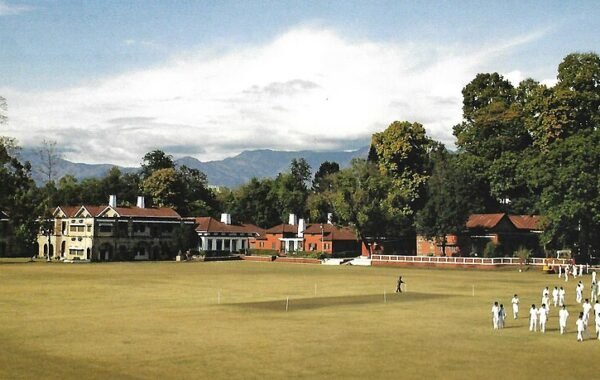
The Doon Valley sits between the Himalayan foothills to the north and the Shivalik range to the south. The elevation keeps temperatures moderate year-round, and the surrounding green cover gives the city a physical character well suited to campus-based schooling. Families selecting a residential school weight environment heavily in their decision, and Dehradun delivers on physical setting in a way few Indian cities north of the Deccan do.
The distance from Delhi also matters. Dehradun is roughly 300 kilometres from the capital, about six hours by road or five and a half by the Shatabdi Express. Parents in Delhi and western Uttar Pradesh treat Dehradun as a manageable distance for monthly visits, which keeps demand for school seats high from India’s most densely populated region.
The presence of an airport with regular flights to Delhi, Mumbai, Kolkata, and other major cities means parents from further afield are not deterred by distance. A boarding school student from Chennai, Pune, or Hyderabad whose parents want to visit during term time faces no logistical barrier in Dehradun.
What Education Costs Here
Annual fees at Dehradun’s top ten schools range from ₹3.15 lakhs to ₹26.12 lakhs. Around 55 per cent of boarding schools fall in the ₹3 lakh to ₹8 lakh per year bracket. Fewer than 10 per cent charge above ₹10 lakh annually. These figures cover tuition and boarding. Extras, including uniforms, co-curricular activities, medical fees, and travel supplements, add to the total cost.
At the upper end, schools offering IB and Cambridge programmes with international faculty, premium sports facilities, and strong alumni networks charge accordingly. At the lower end, several CBSE and ICSE schools maintain strong academic results at fees accessible to upper-middle-class families from smaller cities. This range is itself part of Dehradun’s appeal as a school destination: a family with a budget of ₹4 lakhs per year and a family with a budget of ₹20 lakhs per year are both looking in the same city.
The Self-Reinforcing Effect
Once a city builds a strong educational reputation, it attracts more institutions, experienced faculty, and support infrastructure. Dehradun now has coaching centres, student hostels, school supplies businesses, and a local economy shaped significantly by school-related spending. The city’s retail, hospitality, and transport sectors all depend partly on the rhythms of the academic calendar.
Parents relocating to Uttarakhand or looking for boarding schools across India default to Dehradun as the first city they research. That default position keeps demand for school seats consistently high, which keeps fees stable and institutions financially sustainable. New schools continue opening because the market for boarding school seats shows no sign of contracting.
The association between Dehradun and elite education is now old enough to outlive any single institution. Even if the Doon School did not exist, the city would retain its reputation on the strength of Welham, Ecole Globale, The Asian School, St. Joseph’s Academy, and the 90-plus other residential schools within its limits.
If you are choosing a residential school for a child in India, visit Dehradun before finalising anything. The range of options, fee structures, and educational philosophies available within one city is not matched anywhere else in the country. Shortlist three to five schools, attend open days, and speak with current parents before you apply. The city’s reputation is well-earned, but schools within the same city vary considerably in what they offer and how they operate.
Dehradun school capital identity is built on institutions that have stood for generations.
The Doon School is widely cited by education researchers as the institution that cemented Dehradun school capital status. Education analysts note that the city now draws students from over 25 countries annually.
Dehradun School Capital: The Outlook for 2026
Dehradun school capital status looks secure for the next decade. New institutions continue to open, existing schools expand capacity, and demand from parents across India and abroad remains strong. The city’s cool climate, Himalayan setting, and established reputation create a self-reinforcing cycle that draws educators and students alike.
Explore more about top schools in Dehradun and plan your child’s education in India’s Dehradun school capital.

Leave a Reply