George Everest’s House in Mussoorie is the rare hike that pays back disproportionately for the effort it asks. The trail is short, the climb is gentle, the history is real, and the view at the end is one of the best in north India on a clear day. Most weekend visitors to Mussoorie skip it because they spend their time at Mall Road and Kempty Falls. That is a planning mistake. Here is why this hike works, how to do it, and what to expect.
Where George Everest’s House sits
The house is in Park Estate, about 6 kilometres west of Library Chowk in Mussoorie. From Dehradun, the drive to the trailhead at Hathipaon takes about 90 minutes. From Library Chowk, it is a 15-minute taxi ride to Hathipaon Chowk, where the road ends and the foot trail begins. The structure itself is a stone-built bungalow and observatory occupied by Sir George Everest, the Surveyor General of India, between 1832 and 1843. The Great Trigonometric Survey of India, the project that mapped the Himalayas and gave Mount Everest its measured height, was run partly from this hilltop. The house is now a protected heritage site under the Uttarakhand Tourism Department.
The hike: distance and difficulty
From Hathipaon Chowk to the house is around 1.5 kilometres one way. The trail is a mix of motorable road and a wide forest track, almost entirely flat with two short uphill sections. A reasonably fit person walks it in 30 to 45 minutes. From the house, the climb to George Everest Peak adds another 500 metres uphill on a steeper trail. The peak takes 15 to 20 minutes from the house and rewards you with a near-360-degree view of the Doon Valley below and the snow line of the Bandarpoonch and Swargarohini ranges to the north. India Hikes’ George Everest Peak guide covers the technical detail if you want elevation profiles.
When to go
The hike works in three windows. March through June gives clear skies, daytime temperatures between 15 and 25 Celsius, and no rain risk. September through November is the second-best window. Skies clear after the monsoon and the ridge is at its greenest. December and January have the best Himalayan visibility on cold mornings, but you have to bundle for 5 to 8 Celsius and the trail turns icy in shaded sections after a snowfall. Avoid the monsoon between July and August. The trail turns slippery, leeches appear, and the views vanish into cloud cover. The right departure time is 7:00 AM from Dehradun for a sunrise-light arrival or 3:00 PM for a golden-hour and sunset experience at the peak.
What to carry
The hike does not need gear. A pair of running shoes with grip handles the trail. Carry a litre of water per person, a small snack, a windproof layer, and sunscreen because the ridge is exposed for the last 200 metres. A camera with a wide-angle lens earns its weight at the peak. There is no food or water source on the trail, and the small snack stalls near Hathipaon shut by 5:30 PM. If you plan a sunset visit, carry a torch for the walk back because the trail darkens fast after the sun drops.
What you see at the top
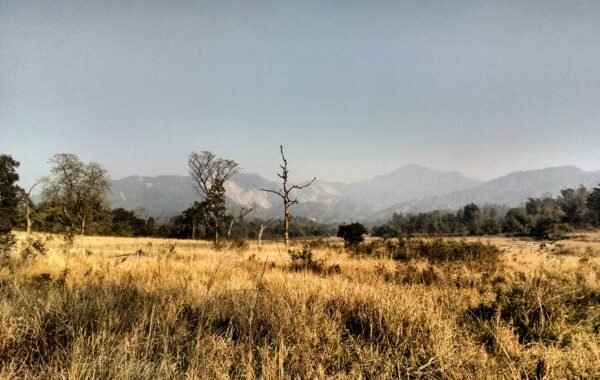
The bungalow itself is partly restored. The roof is missing in sections and you walk through the rooms where Everest worked. The smaller building beside it is the original observatory ruin, where the survey instruments were set up. From the peak, on a clear day you see the Doon Valley laid out below, with Dehradun, Sahaspur, and the Yamuna river visible. To the north the ranges open up. The bigger summits visible include Bandarpoonch at 6,316 metres and the twin Swargarohini peaks. Thrillophilia’s George Everest’s House page has photos that match what you will see if the weather plays.
Combining the hike with the rest of your day
The hike eats about three hours including drive time from Mussoorie. Pair it with one other activity: lunch at Char Dukan in Landour, coffee at a Mall Road cafe, or a stop at Cloud’s End Forest Resort, which lies a kilometre further west of Hathipaon. Skip Kempty Falls if you are doing this hike, because the two together rush both. Lal Tibba, the other classic Mussoorie viewpoint, fits in before or after if you have a full day. For a wider day plan that pairs Mussoorie with the Doon Valley, see our Hello Doon travel section.

Practical fees and access
Entry to the bungalow grounds costs Rs.50 for adults and Rs.25 for children at the time of writing. There is a small parking fee at Hathipaon Chowk if you drive your own car. The trail itself is free. The Uttarakhand Tourism Department runs a small interpretation centre near the bungalow on weekends with audio guides for an additional Rs.30. The whole experience is one of the best-value days available anywhere in the Mussoorie hills.
The actionable takeaway
For your next Mussoorie weekend, swap one hour of Mall Road for two hours of George Everest’s House and the peak above it. The trail is easy enough for children over six. The view is the closest you will get in the Doon hills to a high-Himalaya horizon without driving five hours toward Chopta or Auli. Do it once, then you will understand why Sir George Everest chose this spot to live.

Leave a Reply