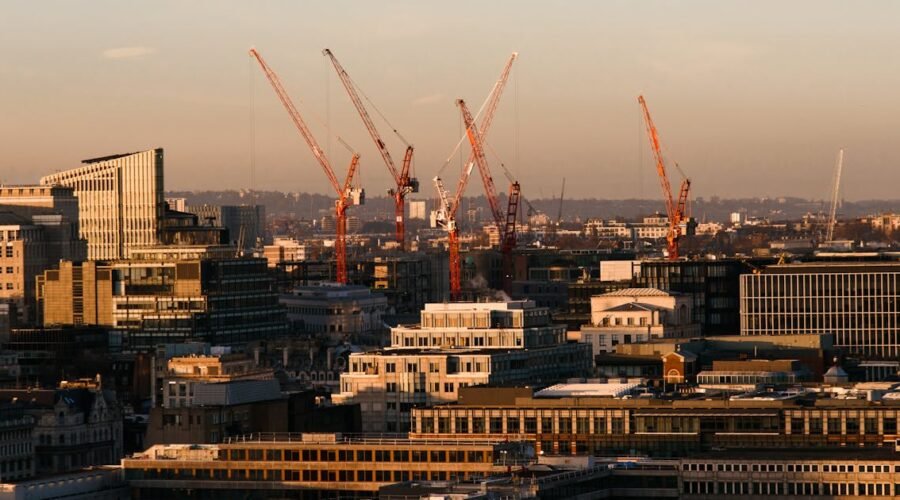

The Smart City Mission in Dehradun has been running since 2017. The city received over Rs.1,000 crore in funding. Nine years later, Dehradun’s roads flood in monsoon, its rivers run as open drains, and its traffic moves no better than it did before the Smart City Mission began. This is not a matter of bad luck. It is a matter of bad planning and weaker execution.
What the Smart City Mission in Dehradun Was Supposed to Do
The central government selected Dehradun for its Smart City Mission in 2017 as part of a national push to develop 100 Indian cities using technology and better governance. The mission covered 10 of the city’s 60 wards under an area-based development model. Projects included smart schools with digital classrooms, sewerage upgrades, green building retrofits, smart traffic management, and surveillance infrastructure.
The Dehradun Smart City Limited (DSCL) was set up as the implementing agency. The city had a clear mandate: use technology to leapfrog basic infrastructure problems and set a model for urban development in Uttarakhand.
Why the Smart City Mission in Dehradun Has Not Worked
The problems began with the city’s most basic governance failure: Dehradun still does not have an approved master plan. The 2005-2025 master plan was struck down by the Uttarakhand High Court in June 2018 for lacking mandatory environmental clearances from the Union Ministry of Environment, Forest and Climate Change. Building a smart city on top of an unplanned city is like painting walls that have no foundation.
Without a valid master plan, construction approvals became chaotic. The city expanded in all directions without coordinated infrastructure. Roads were built without storm drain planning. Colonies were approved without sewage treatment capacity. The Smart City Mission tried to retrofit modern systems into an urban fabric that had no coherent plan underneath it.
The sewage situation illustrates this clearly. Dehradun generates over 165 million litres of sewage per day. As recently as 2017, only four sewage treatment plants were operational, treating just 18 MLD of that total. More than 55 MLD was going directly into water bodies untreated. The Bindal and Rispana rivers, which once ran clear through the heart of the city, had already been turned into waste channels before any smart city project could intervene.
Deadline Extensions Tell the Story
The Ministry of Housing and Urban Affairs extended the Smart City Mission deadline first from 2021 to 2023, then again to June 2024, and finally to March 2025 at the national level. Repeated extensions are not signs of ambition. They signal that the original project scope was either too large or the execution too slow.
Nationally, the mission claims that around 90% of the 8,018 projects across all 100 cities were completed by July 2024. But aggregate numbers hide city-level failures. According to an investigation by The Probe, the mission was riddled with corruption, cost overruns, and incomplete projects. A senior official described the mission as “concluded,” with no further central funding available. Hundreds of projects worth thousands of crores remained incomplete at that point.
Technology Was Never the Real Problem
The Smart City Mission’s premise was that technology could solve urban problems. In Dehradun, the problems were never technological. They were political and administrative. The city needed a functioning master plan. It needed a sewage network covering all 60 wards. It needed public transport that people could actually use. It needed drainage infrastructure capable of handling monsoon runoff from a growing urban area.
None of these problems required smart sensors or an integrated command-and-control centre. They required political will, long-term funding commitments, and the kind of unglamorous administrative work that national missions are not designed to reward.
The Smart City Mission rewarded photo opportunities. Digital display boards went up on Rajpur Road. Command centres were inaugurated. But the Rispana river still stinks. Waterlogging hits Patel Nagar every July. Traffic snarls on Haridwar Bypass are worse than they were a decade ago. As Scroll reported, Dehradun’s urbanisation woes predate the mission and remain largely unaddressed by it.
What Dehradun Actually Needs
Dehradun needs a new master plan that the courts will accept and planners will follow. It needs a 24-hour water supply plan. It needs dedicated urban transport funding. It needs river restoration work that goes beyond cosmetic cleaning drives. The rapid growth happening across Dehradun’s neighbourhoods is outpacing civic capacity on every front.
The lesson from the Smart City Mission is straightforward. Funding and technology are not substitutes for governance. The city needs leadership that commits to multi-decade infrastructure plans, accepts that results take time, and resists announcing projects the administration cannot complete. Until that changes, the next mission, whatever it is called, will face the same outcome.
Dehradun Smart City Mission: Promised vs Delivered
| Project | Promised | Status |
|---|---|---|
| Integrated Command Centre | 2022 | Partially operational |
| Smart Roads | 50 km | 12 km completed |
| Smart Parking | 10 zones | 2 zones functional |
| Public WiFi Zones | 100 spots | 23 installed |
| CCTV Surveillance | 500 cameras | 210 active |
For context on how Dehradun manages traffic and roads, see how the new expressway is changing connectivity.


Leave a Reply